
September 19, 2026
Decaf Coffee: What It Is, How It's Made, and Why It Belongs in Your Coffee Program
What is decaf coffee, how coffee is decaffeinated, the difference between Swiss Water and Mountain Water Process, why decaf-only roasters are emerging, and how an omni roast decaf can fit into a modern cafe coffee program.
Written by Dose Coffee
Decaf Coffee Enthusiast
The Coffee World Glow-up: Decaf Coffee Ain't What It Used to Be
For a long time, decaf was treated like the consolation prize of the coffee world. Regular coffee got the good beans–decaf got whatever was left.
That attitude is changing.
Specialty coffee has spent the last several years taking decaf much more seriously. Better green coffee, better decaffeination, better roasting, and better brewing have made it possible to produce decaf that tastes like coffee—not an apology for coffee. Consumers are noticing.
Decaf, low-caf, and half-caf options are becoming a more visible part of specialty coffee. Some roasters are even building their entire brands around coffee without the caffeine. For cafes, that creates an opportunity.
Decaf doesn't have to be a dusty bag hidden behind the regular espresso–it can be a stand-out part of the coffee program.
Why Are More People Drinking Decaf?
Have you witnessed (or participated in) this interaction:
Barista: Regular or decaf?
Customer: Decaf? What's the point?
Breakfast, lunch, dinner, before bed–people are drinking coffee around the clock. And while caffeine was seen as a source of energy boost, most have realized that bump comes when consumed in moderation.
What's worse–the excessive caffeine is still affecting your sleep. You're tired when you wake up, you reach for the caffeine, and the cycle continues.
Focus on our health is on the rise, with sleep quality getting particular focus. People are choosing to reduce their caffeine intake to help. But, what if you want to reduce your caffeine without reducing your enjoyment of coffee?
You also have customers who are sensitive to caffeine who simply love the taste of coffee.
Specialty coffee is increasingly responding with better options. Quality decaf coffee and espresso is on the rise.
The Rise of Decaf-Only Coffee Roasters
One of the most interesting developments is the emergence of roasters whose entire identity is built around decaffeinated coffee. Instead of treating decaf as one SKU sitting at the bottom of a coffee menu, these companies are making decaf the entire point. That changes the conversation.
A decaf-focused roaster can offer multiple origins, processing methods, roast profiles, blends, and seasonal coffees without treating caffeine as the defining characteristic of the product. That kind of specialization would have been unusual not long ago.
Today, it makes sense.
When the quality of the underlying green coffee and decaffeination process improves, there is no reason decaf has to be bland and boring.
How Is Coffee Decaffeinated?

There are several ways to remove caffeine from unroasted green coffee. The major categories include:
- Water-based processes
- Ethyl acetate (EA)
- Methylene chloride
Each uses a different mechanism to separate caffeine from the green coffee.
The goal is always similar: remove caffeine while preserving as much of the coffee's flavor, aroma, body, and origin character as possible.
The process matters, but it isn't the only thing. The quality of the original green coffee; the roast profile matters; and, ultimately, how the coffee is brewed all matter.
Water Process
Water-process coffees use water and coffee-derived soluble compounds to create conditions where caffeine can be removed while minimizing the loss of other flavor compounds.
Two names you'll commonly encounter are:
- Swiss Water Process (SWP)
- Mountain Water Process (MWP)
They are similar in concept, but they are not the same process. More on this, in a bit.
Ethyl Acetate
Ethyl acetate, commonly called EA, and sometimes Sugarcane Decaf, is a solvent-based decaffeination method.
EA occurs naturally in many fruits and is also commercially produced. EA is also commonly derived from sugarcane, hence the nickname.
EA decaf can produce excellent coffee and is widely used in specialty coffee. The roasted coffee may appear darker than its actual roast level and retain a bit more sweetness.
The important thing is to understand that "sugarcane" refers to the source of the ethyl acetate—not to a completely different category of water-based decaffeination.
Methylene Chloride
Methylene chloride is another solvent used in some decaffeination processes. The method has been used extensively because methylene chloride is highly selective for caffeine and can produce coffee with strong retention of desirable flavor characteristics.
However, some consumers and coffee companies specifically seek decaf processed without chemical solvents. Specifically, those who desire certified organic coffee will not find options using the MC process.
That demand has helped water-based processes become especially prominent in specialty coffee.
Swiss Water Process vs. Mountain Water Process
If you're buying specialty decaf, you've probably seen SWP and MWP on coffee descriptions.
So what's the difference?
- Both are water-based methods.
- Both use a coffee-derived solution to help remove caffeine.
- Both are designed to remove caffeine while preserving the coffee's desirable soluble compounds.
- But they use different proprietary processing systems.
Swiss Water Process
The Swiss Water Process uses a solution called Green Coffee Extract, which contains coffee's soluble compounds but has been filtered to remove caffeine.
Green coffee is exposed to the extract under carefully controlled conditions. Because the surrounding solution is already saturated with coffee compounds, the process encourages caffeine to migrate out of the bean while minimizing the movement of other soluble compounds.
The caffeine-containing extract is then passed through carbon filtration, which captures the caffeine. The extract can then be reused.
Mountain Water Process
The Mountain Water Process begins with an analysis of the green coffee to determine the appropriate extraction conditions, followed by steaming and preparation of the beans.
Caffeine is then extracted under controlled conditions of flow, temperature, pressure, and vacuum, using a water-based saturated solution containing soluble solids derived from coffee beans.
Once extraction is complete, the coffee undergoes a controlled triple-drying system before the beans are polished.
So Which One Is Better?
SWP and MWP are very similar decaffeination processes that produce similar results. When it comes to water-processed decaf, the quality of the bean and roasting profile matter more.
What Does Decaffeination Do to Coffee?
Alas, decaffeination changes the green coffee. The process requires hydration, extraction, drying, and handling that ordinary green coffee doesn't experience.
It can have a different density, moisture profile, and solubility than the same coffee would have before decaffeination. As a result, decaf can behave differently in the roaster and during brewing.
That's why roasting decaf isn't simply a matter of taking a regular coffee roast profile and running it again. The roaster needs to account for the coffee's physical characteristics and the way it responds to heat.
A good decaf roast can emphasize sweetness, body, and balance while preserving the character that made the coffee interesting in the first place.
What Role Should Decaf Play in a Cafe Coffee Program?
This is where things get interesting. For a cafe, decaf isn't just another bag of coffee–it's part of the customer experience.
A customer ordering decaf is still ordering coffee. They still care about flavor. They still care about quality. And they still notice when the cafe treats their drink like an afterthought.
A thoughtful decaf program can serve several purposes.
Give Customers a Real Choice
The simplest reason to offer decaf is also the most important: Some customers want it.
They might want a decaf latte at 8 p.m. Or, they may simply be sensitive to caffeine.
Whatever the reason, giving them a quality option communicates that their order matters.
Make Decaf Part of the Espresso Program
Traditionally, many cafes maintain a separate decaf espresso. That's perfectly reasonable.
But it creates another coffee to manage, another grinder to dial in, another recipe to train, and another inventory item to track.
For some cafes, that is worthwhile. For others, it isn't.
That's where an omni-roast decaf can be especially useful.
What Is an Omni-Roast Decaf?
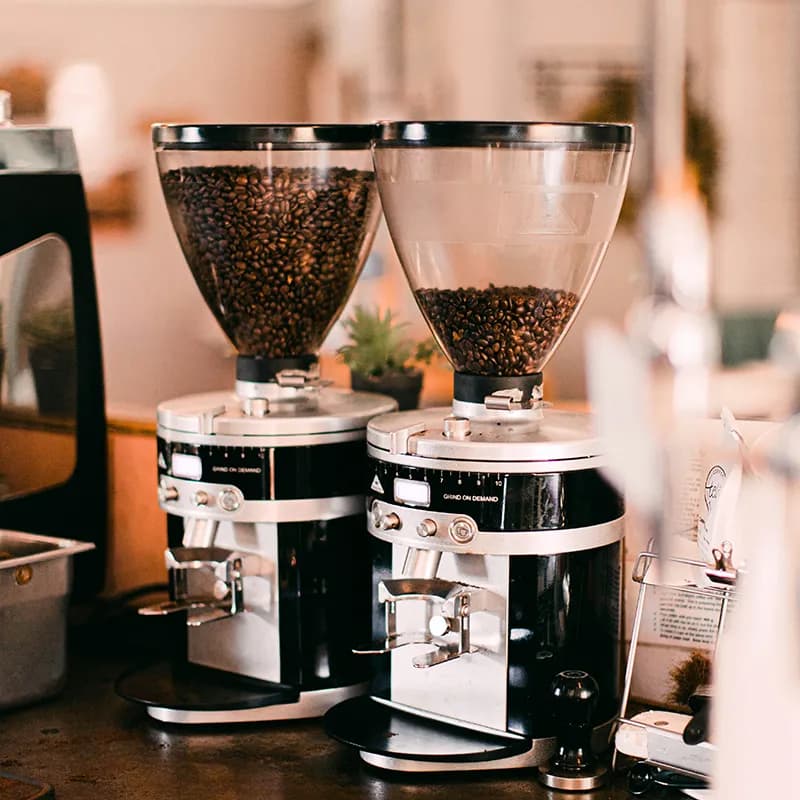
An omni-roast is designed to perform across multiple brewing methods.
Instead of pushing the coffee specifically toward traditional espresso characteristics or toward a particular pour-over profile, the roast aims for balance and versatility.
For a cafe, that can be valuable.
One decaf coffee can potentially be used for:
- Espresso
- Americanos
- Cappuccinos
- Lattes
- Drip coffee
- Batch brew
- Pour over
- Retail bags
The exact performance will depend on the coffee, roast, equipment, and recipes, but the concept is straightforward:
One coffee. More uses. Less complexity.
Why an Omni-Roast Decaf Makes Sense for a Cafe
Imagine a cafe that sells significantly more caffeinated espresso than decaf–it's not difficult to imagine as it is every cafe, today.
It may not make sense to carry a dedicated decaf espresso, a separate decaf batch brew, and a separate decaf retail offering.
An omni-roast decaf can simplify the program. Use it as the decaf espresso. Offer it as brewed coffee. Feature it in a pour-over rotation.
One green coffee purchase can serve multiple parts of the menu. That can reduce inventory complexity while giving customers a more consistent decaf experience.
Omni-Roast Does Not Mean "Roast It for Everything"
An omni-roast is a deliberate roast profile. The goal is to create a coffee that has enough structure, sweetness, solubility, and balance to work across different brewing methods. That requires careful sourcing and roasting.
An omni-roast decaf shouldn't be mediocre at everything. It should be good at many things.
Decaf Doesn't Have to Be an Afterthought
A modern cafe has more ways to think about coffee than simply regular versus decaf.
Single origins, blends, light roasts, dark roasts, omni-roasts, half-caf options. And specialty decafs that can stand on their own.
The common thread is quality. Decaf drinkers shouldn't have to accept a coffee that tastes like an obligation.
They should be able to order a cortado, latte, pour over, or batch brew and get a coffee worth drinking.
That is where the specialty coffee industry is heading and why some companies are taking it even further by making decaf the center of their entire brand.
Building a Better Decaf Program
If you're building a cafe coffee program, don't choose a decaf simply because it is decaf. Evaluate it the same way you evaluate everything else.
Start With the Green Coffee
- Where is it from?
- How was it processed?
- What is the quality?
Decaffeination doesn't erase the importance of the green coffee.
Understand the Decaffeination Process
Ask how the coffee was decaffeinated. SWP? MWP? EA?
There isn't one universally correct answer, but knowing the process helps you understand the coffee you're buying and communicate that information to customers.
Taste It as Espresso
If you're going to serve it as decaf espresso, don't evaluate it only as a pour over.
- Pull shots.
- Taste it straight.
- Taste it with milk.
- Try it as an Americano.
The coffee needs to work in the context in which your customers will actually drink it.
Taste It as Brewed Coffee
If the same coffee will be used for drip or batch brew, test that too. A coffee that makes a great espresso isn't automatically a great batch brew.
That's the point of an omni-roast: it should give you enough flexibility to make the same coffee work across the program.
The Future of Decaf Is Specialty Coffee
The biggest change in decaf isn't a new extraction technology–it's a change in expectations.
Customers increasingly expect decaf to be treated like coffee. Roasters are responding with better green coffees, better processing, better roasting, and more intentional offerings. Dedicated decaf brands are proof that there is a market for coffee where caffeine isn't the selling point.
And for cafes, that creates an opportunity to stop thinking about decaf as a checkbox.
A well-sourced, well-decaffeinated, well-roasted coffee can become a legitimate part of the program.
Sometimes your customers want the coffee, they just don't want the caffeine.
That's not a compromise–that's a coffee program doing its job.
Build Your Coffee Program With Dose
Dose Coffee works with cafes, restaurants, and businesses looking for specialty coffee that fits the way they actually serve it.
That includes wholesale coffee, toll roasting, private-label coffee, espresso, omni-roast coffee, and, of course, decaf.
Whether you need a dependable decaf for an existing cafe or you're building an entire coffee program from scratch, we can help you select and roast coffees around your menu, equipment, and customers.
Connect with DoseFrequently Asked Questions About Decaf Coffee
What is decaf coffee?
Decaf coffee is coffee that has had most of its caffeine removed from the green coffee bean before roasting. Decaffeination typically removes about 97% or more of the caffeine, depending on the process.
Is decaf coffee completely caffeine-free?
No. Decaf coffee is not completely caffeine-free. Small amounts of caffeine remain after decaffeination, though most methods remove 97-99%.
How much caffeine is in a shot of decaf espresso?
Decaf espresso has trace amount of caffeine. A double shot of decaf espresso contains, approximately, 2-5mg of caffeine, compared to a double shot of regular espresso which contains, approximately, 120-150mg of caffeine
What is the Swiss Water Process?
The Swiss Water Process is a water-based decaffeination method that uses water, temperature, time, diffusion, and carbon filtration to remove caffeine from green coffee without chemical solvents.
What is Mountain Water Process decaf?
Mountain Water Process is a water-based decaffeination method that uses a water-based saturated solution of coffee solubles to selectively extract caffeine from green coffee.
What is the difference between Swiss Water and Mountain Water Process?
Both are water-based decaffeination methods that use coffee-derived compounds and controlled conditions to remove caffeine. The primary difference is the specific technology, solution, filtration, and processing system used by each decaffeination facility.
Which decaf methods are certified Organic?
Swiss Water Process and Mountain Water Process maintain Organic certifications of coffee as they do not use chemical solvents in their decaffeination process.
Can decaf coffee be specialty grade?
Yes. Decaffeination does not determine whether a coffee is specialty grade. The quality of the green coffee, processing, decaffeination, roasting, and brewing all contribute to the final cup.
What is an omni roast decaf coffee?
An omni roast decaf is roasted to perform well across multiple brewing methods rather than being optimized for only one preparation. A well-developed omni roast decaf can work for espresso, drip coffee, pour over, and other cafe brewing methods.
Should a cafe offer decaf coffee?
For many cafes, decaf provides an important option for customers who want coffee flavor and the cafe experience without as much caffeine. An omni roast decaf can make that option easier to manage across espresso and brewed coffee service.
Photo Credits
- Evening coffee date photo by Joshua Fernandez on Unsplash
- Shared coffee photo by Sam Hojati on Unsplash
- Dueling espresso grinders photo by tabitha turner on Unsplash