
October 18, 2026
Washed vs Natural vs Honey Processed Coffee: What Processing Really Changes
Learn the differences between washed, natural, and honey processed coffee, how newer fermentation methods are changing specialty coffee, and how processing affects pour over, espresso, and coffee program design.
Written by Dose Coffee
Natural Coffee Fanatics
Processing and Why Every Coffee is a Unique Butterfly
Coffee is just coffee, right? What is coffee processing, anyways?
Coffee processing is one of the biggest reasons two coffees grown in similar conditions can taste completely different. Put the same variety from the same region through a washed process and a natural process, and the cup can move from crisp citrus and florals to ripe fruit, sweetness, and a heavier body. Change the fermentation conditions again, and you may find tropical fruit, wine-like aromatics, spice, or flavors that seem almost impossible to associate with coffee.
And processing does not stop mattering once the green coffee reaches the roaster. It can influence how a coffee responds to roast development, how quickly it extracts, and how a barista approaches it on a pour over or espresso machine.
For a coffee program, that makes processing more than a line on a green coffee spec sheet. It is one of the tools used to shape the experience in the cup.
The Three Classic Coffee Processing Methods
Washed, natural, and honey processing are often described as the "big three" of specialty coffee processing. They are not the only ways to process coffee, but they provide a useful starting point for understanding what happens between harvest and roasting.
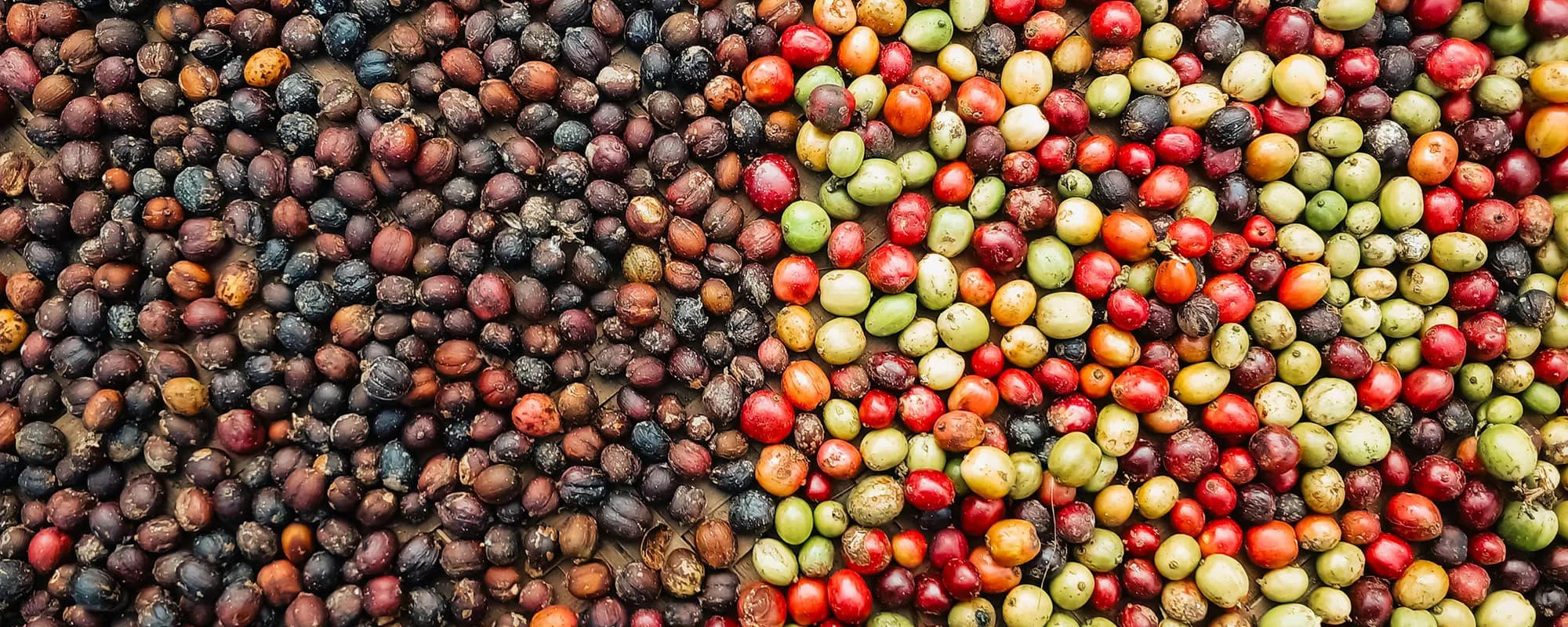
Before we begin, it's important to know that coffee starts out as a cherry. That's right–coffee is a fruit! What we all call coffee, or a coffee bean, is actually the seed of the coffee cherry. The processing method is what gets us from the cherry to the unroasted bean that arrives at our roastery.
Washed Process
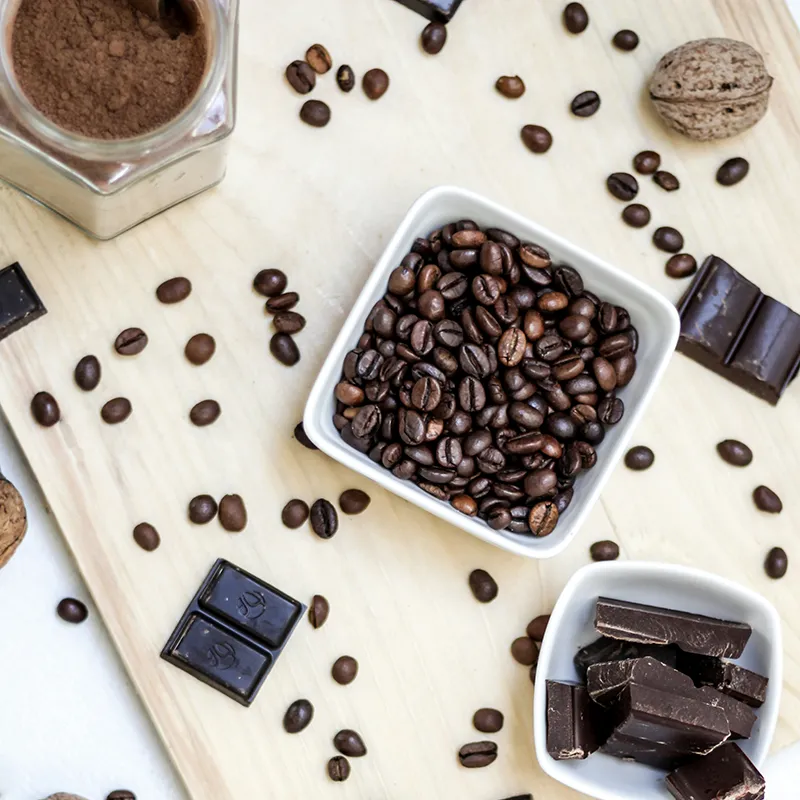
For those unfamiliar with differently processed coffees, the traditional coffee flavor we're all familiar with is surely that of a washed process.
Washed coffee, sometimes called fully washed coffee, is processed by removing the coffee cherry's skin and pulp before the beans are dried. The remaining mucilage is typically removed through fermentation, washing, mechanical action, or some combination of these methods before the coffee is dried.
The result is often associated with a clean, transparent cup where acidity, florals, citrus, and origin characteristics can be easier to identify. That does not mean every washed coffee is light or delicate. A washed Colombian coffee can be sweet and full-bodied, while a washed Ethiopian coffee may be intensely floral and tea-like.
Typical sensory tendencies:
- Higher perceived clarity
- Bright or structured acidity
- Floral, citrus, stone fruit, or tea-like characteristics
- Less heavy body than many naturals
- Strong expression of variety and origin
Washed coffees have remained a staple of specialty coffee because they can provide a clean reference point for evaluating an origin, variety, or producer. Recent industry discussion has even pointed to renewed interest in washed coffees as some buyers look for more transparent, terroir-driven profiles alongside the rise of heavily fermented coffees.
Natural Process
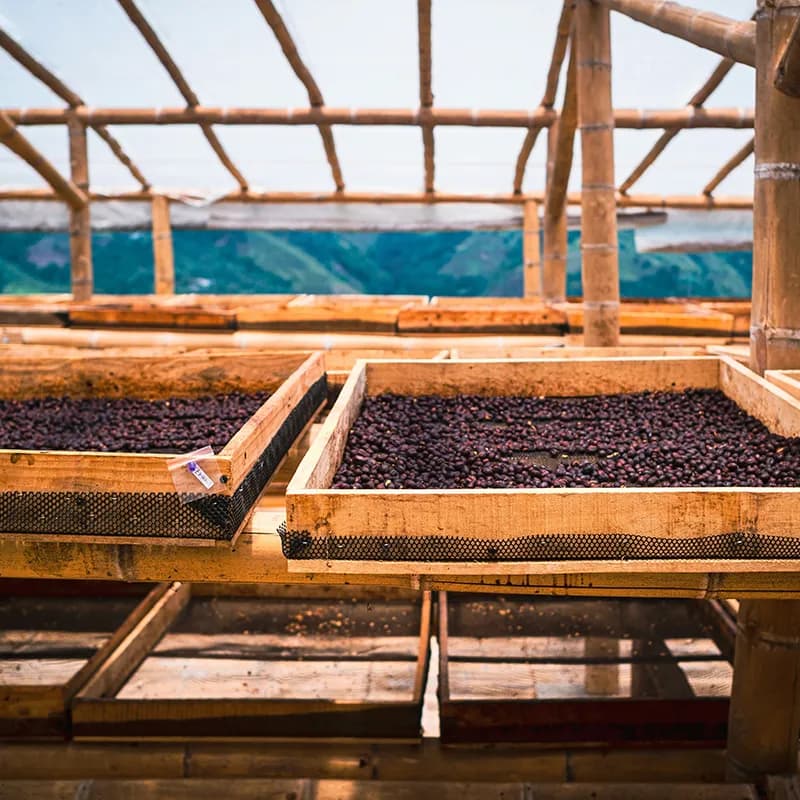
Natural processing takes the opposite approach. After harvest, whole coffee cherries are dried with the fruit still surrounding the seed. As the cherries dry, the coffee is exposed to the physical and chemical effects of the fruit and its microorganisms.
Naturals are often associated with intense sweetness, ripe fruit, heavier body, and flavors ranging from blueberry and strawberry to tropical fruit, dried fruit, wine, chocolate, and fermented notes. Well-executed naturals can be remarkably clean.
Typical sensory tendencies:
- Pronounced sweetness
- Fuller body
- Ripe, dried, or tropical fruit
- Lower perceived acidity than many washed coffees
- Potential for fermented or "funky" character
Natural processing has become increasingly common in specialty coffee, particularly in markets where consumers and cafés are interested in more expressive fruit-forward coffees. It has also become much more common as an espresso option, where added sweetness and body can translate well into concentrated shots.
Honey Process
Despite the name, honey processing does not involve honey.
Instead, coffee cherries are depulped and the sticky mucilage surrounding the seed is left partially or substantially intact during drying. Because some of the fruit layer remains, honey processing sits somewhere between washed and natural processing in the traditional processing spectrum.
The amount of mucilage left on the coffee can vary considerably. Terms such as white honey, yellow honey, red honey, and black honey are commonly used, particularly in Central America, although terminology is not perfectly standardized across producers.
Typical sensory tendencies:
- Noticeable sweetness
- More body than many washed coffees
- More clarity than many naturals
- Fruit, caramel, brown sugar, and honey-like sweetness
- Wide range depending on drying and fermentation management
Honey processing became strongly associated with Costa Rica and has since spread much more widely. It can be particularly useful for a coffee program that wants some of the sweetness and texture of a natural without moving all the way into a heavily fruit-driven profile.
Washed vs Natural vs Honey at a Glance
| Process | Fruit removed before drying? | Common sensory tendencies | Typical role in a coffee program |
|---|---|---|---|
| Washed | Yes | Clean, bright, floral, citrus, clear acidity | Core offering, origin-focused coffee, filter staple |
| Natural | No | Sweet, fruity, full-bodied, ripe fruit | Feature coffee, fruit-forward filter, expressive espresso |
| Honey | Partially | Sweet, balanced, medium-to-full body | Versatile single origin, approachable feature coffee |
These are tendencies, not rules. Variety, altitude, climate, fermentation, drying, storage, roast profile, and brewing all influence the final cup.
How Processing Changes Pour Over Coffee
Pour over is where processing differences can become especially obvious because the brewing method gives the coffee room to express acidity, aromatics, sweetness, and texture without the concentration of espresso or the addition of milk.
Washed coffees on pour over
Washed coffees often make excellent pour over coffees when the goal is clarity. A well-developed washed Ethiopian, Kenyan, Colombian, or Central American coffee can produce a structured cup where individual flavor characteristics are easy to distinguish.
For a brewer, that often means a relatively straightforward starting point: preserve the coffee's acidity and aromatics without overextracting it. If a washed coffee tastes thin or sharp, grind size, water temperature, ratio, agitation, and roast development may all be worth investigating.
Natural coffees on pour over
Natural coffees can be spectacular on pour over, but they may present a different extraction challenge. High sweetness and heavy fruit character can make a natural taste intense even when the cup is not particularly concentrated.
Some naturals benefit from a slightly more restrained approach to agitation, especially when the coffee produces a lot of fines. Others respond beautifully to higher extraction and hotter water. The important point is that the process can influence the coffee's extraction behavior, so a recipe that works perfectly for a washed coffee is not automatically the right recipe for a natural.
Honey coffees on pour over
Honey coffees can occupy a useful middle ground. They often provide enough sweetness and body to feel substantial while retaining some of the clarity associated with washed coffees.
For a café offering multiple pour over options, this makes honey processing a useful category for customers who want something more distinctive than a traditional washed coffee but less intensely fruit-driven than some naturals.
How Processing Changes Espresso
Espresso changes the conversation because pressure, concentration, roast development, and a short brew time amplify certain characteristics.
Natural processed coffees are often popular in espresso because their sweetness, body, and fruit character can create a rich, expressive shot. A naturally processed coffee may produce notes of berry, chocolate, stone fruit, or dried fruit that remain noticeable even after milk is added.
Washed coffees can be equally compelling. Their acidity and clarity can produce espresso with a crisp structure, citrus character, florals, and a clean finish. They can also make an excellent foundation for milk drinks when the roast and recipe provide enough sweetness and body.
Honey coffees can bridge the two approaches, bringing sweetness and texture without necessarily pushing the profile as far toward ripe fruit or fermentation.
The key lesson is simple: processing does not determine whether a coffee is "for espresso" or "for filter." It changes the starting point. Roasting and brewing determine what you ultimately do with that starting point.
The Rise of Experimental Processing
If washed, natural, and honey are the traditional framework, the modern coffee industry has started adding a much larger vocabulary around fermentation and processing.
The shift has accelerated over the past decade. Controlled fermentation, carbonic maceration, thermal shock, yeast inoculation, lactic fermentation, and co-fermentation have moved from competition-stage experiments into commercial specialty coffee. Some methods that were once considered unusual are now familiar to specialty coffee buyers and consumers.
The broader trend is toward intentional fermentation: producers are controlling variables such as oxygen exposure, temperature, fermentation time, pH, microbial activity, and drying conditions to influence the sensory result.
Anaerobic Fermentation
Anaerobic fermentation takes place in an environment with little or no oxygen, commonly inside sealed tanks or containers. Producers can monitor fermentation variables and then dry the coffee once the desired stage is reached.
The term describes an environment rather than one single standardized recipe. That is important: two coffees labeled "anaerobic" can taste completely different depending on the coffee, fermentation conditions, duration, temperature, and drying method.
Expect anything from increased fruit intensity and sweetness to wine-like, tropical, or spicy characteristics.
Carbonic Maceration
Carbonic maceration borrows an idea from winemaking. Coffee cherries are placed in a sealed environment and exposed to carbon dioxide, creating conditions that change how fermentation proceeds.
The resulting coffees can show unusually pronounced fruit, floral, spice, or confectionary characteristics.
Lactic Fermentation
Lactic fermentation encourages microorganisms associated with lactic acid production to influence the fermentation process. Producers may use controlled conditions or inoculation to steer the fermentation toward particular sensory outcomes.
These coffees can display creamy acidity, yogurt-like or lactic impressions, and pronounced sweetness. As with anaerobic processing, "lactic" describes an approach rather than a single universal recipe.
Thermal Shock
Thermal shock processing uses temperature changes as part of the processing protocol. One well-known approach involves manipulating fermentation or washing temperatures to influence the coffee's final sensory characteristics.
The term is now used across a range of producer-specific techniques, so buyers should ask for the actual process rather than assuming every thermal-shock coffee was produced in exactly the same way.
Yeast-Inoculated and Other Controlled Fermentations
Some producers introduce selected yeasts or other microorganisms to make fermentation more predictable and repeatable. The goal is often to amplify particular characteristics rather than simply allowing fermentation to proceed uncontrolled.
This is part of a broader move toward treating coffee processing as a form of sensory design. Producers are increasingly measuring and documenting variables such as temperature, time, pH, and microbial activity rather than relying solely on traditional processing routines.
Co-Fermentation and Infused Coffee
One of the newest and most debated categories is co-fermentation. In broad terms, coffee is fermented alongside additional ingredients or substrates that influence the fermentation environment and can contribute to the final sensory profile.
Fruit, spices, botanicals, and other ingredients have appeared in different forms of co-fermented or infused coffee. The terminology is still evolving, and the distinction between a coffee whose fermentation is influenced by another ingredient and a coffee that is intentionally infused with flavor is important for transparency.
These coffees are becoming more visible in specialty coffee and increasingly function as a distinct category rather than a novelty. At the same time, they remain divisive: some buyers value the creative possibilities, while others prefer processing that preserves a clearer connection to variety, origin, and terroir.
For a coffee program, transparency matters. If a coffee has been co-fermented or infused, customers should be able to understand what was done to it.
Are Experimental Processes Replacing Washed, Natural, and Honey?
Not exactly.
The specialty coffee market is becoming more diverse rather than moving toward one dominant processing method. Recent industry reporting suggests that experimental processing continues to expand, particularly in markets seeking unusual and highly expressive flavors. At the same time, demand for traditional, clean, terroir-driven profiles remains strong.
That creates an increasingly useful distinction for roasters: processing can be part of a coffee program's architecture, not simply a novelty category.
A balanced lineup might include:
- A washed coffee for clarity, familiarity, and origin expression
- A natural coffee for sweetness, fruit, and texture
- A honey coffee for balance between sweetness and clarity
- An experimental fermentation as a rotating feature for customers who want something unusual
- A co-fermented or infused coffee, when appropriate, as a clearly labeled limited offering
This gives customers different sensory experiences without asking every coffee to perform the same job.
Where Each Process Fits in a Coffee Program

There is no universal processing hierarchy. The right mix depends on the customers, menu, equipment, price point, and identity of the coffee program.
For a café with a broad customer base
Washed coffee can provide a dependable, clean anchor. Add a natural or honey coffee to give customers an obvious point of difference, then rotate an experimental coffee when you want something that creates conversation.
For a specialty pour over program
Processing can be used almost like a flavor map. A washed coffee can showcase floral and citrus characteristics, a natural can emphasize fruit and sweetness, and an experimental fermentation can demonstrate just how far coffee processing can push flavor.
For an espresso-focused program
Natural and honey coffees can bring sweetness and body to espresso, while washed coffees can provide acidity, clarity, and structure. A program built around single-origin espresso can use processing as another way to keep the lineup changing without changing the fundamental brewing format.
For a wholesale coffee program
Consistency and accessibility matter alongside novelty. A washed or honey coffee can serve as an everyday offering, while natural and experimental coffees can create seasonal or limited-release opportunities. The goal is not to stock every processing method. It is to use processing intentionally to give each coffee a job.
The Bottom Line
Washed, natural, and honey processing are not competing answers to the question of how coffee should taste. They are different tools for shaping the green coffee before it ever reaches the roaster.
Washed processing tends to emphasize clarity, acidity, and origin character. Natural processing often increases sweetness, fruit intensity, and body. Honey processing can combine elements of both. Newer approaches such as anaerobic fermentation, carbonic maceration, thermal shock, lactic fermentation, yeast inoculation, and co-fermentation add even more possibilities.
For coffee drinkers, processing is a useful clue when choosing a bag of coffee. For baristas, it can help explain why two coffees need different recipes. And for a coffee program, it can become a strategic way to build variety across pour over, espresso, and seasonal offerings.
The next time you see washed, natural, honey, or anaerobic on a coffee bag, do not treat it as just another piece of green coffee jargon. It is a hint about how the coffee got here—and what might be waiting in the cup.
Craft an Expressive Coffee Menu with Dose
At Dose Coffee, we're junkies for unique coffees and the processing methods that shaped them.
Washed, natural, honey and funky fermnatation—we're here for it!
If you're looking to launch a coffee program that stands out, or add a new standout to your cafe lineup, let's chat.
Connect with DoseFrequently Asked Questions
What is the most common coffee processing method?
Washed, natural, and honey processing are the three major traditional processing categories in specialty coffee. Their relative prevalence varies significantly by producing country, climate, infrastructure, producer preference, and market demand.
What is the difference between washed and natural coffee?
Washed coffee has the fruit and mucilage removed before drying, while natural coffee is dried with the coffee cherry intact. Washed coffees often emphasize clarity and acidity, while naturals commonly have more body, sweetness, and ripe fruit character.
Is natural coffee stronger than washed coffee?
No. 'Strength' can refer to brew concentration, perceived intensity, body, or caffeine, and processing does not directly determine any of those by itself. Natural coffees often taste more intense because fruit and fermentation characteristics can increase perceived sweetness and flavor intensity.
What is honey processed coffee?
Honey processing removes the coffee cherry's skin and pulp but leaves some mucilage on the seed during drying. It sits between washed and natural processing and can produce a combination of sweetness, body, and clarity.
Which coffee process is best for espresso?
There is no single best process for espresso. Natural and honey coffees can bring sweetness and body, while washed coffees can provide clarity and structure. The right choice depends on the roast profile, coffee, recipe, and style of espresso program.
What are anaerobic and carbonic maceration coffees?
They are controlled fermentation approaches that change the environment in which coffee ferments. Anaerobic fermentation limits oxygen exposure, while carbonic maceration uses a sealed environment with carbon dioxide. Both can produce distinctive fruit, fermentation, and spice characteristics.
What are co-fermented coffees?
Co-fermented coffees are produced when coffee is fermented alongside additional ingredients or substrates that influence microbial activity and the resulting flavor. The category is increasingly visible in specialty coffee, but terminology and definitions are still evolving.
Does coffee processing affect caffeine?
Processing can influence the composition of green coffee to some degree, but the caffeine content of a brewed coffee is affected much more directly by coffee species and variety, dose, brew ratio, extraction, and preparation method. Processing should not be treated as a reliable way to predict caffeine content.